
Hardwall vs Softwall Cleanroom Boundaries for Inspection, Packaging and Rework Areas
Technical Article | Local Cleanroom Boundaries
Hardwall vs Softwall Cleanroom Boundaries for Inspection, Packaging and Rework Areas
Hardwall cleanroom, softwall cleanroom and lab partitions can all create local clean zones, but they solve different problems. The right boundary depends on airflow stability, cleaning frequency, traffic, durability, expansion plans and how much change the process area will face later.
Many inspection, packaging and rework areas do not need a full building-wide cleanroom. They need a reliable local boundary around a specific task. In those cases, the choice between rigid cleanroom panels, flexible curtain walls and lighter laboratory partitions has a direct effect on airflow control, maintenance and future layout changes.
Boundary Choice
Choose the Boundary Around the Process, Not the Product Name
The terms hardwall cleanroom and softwall cleanroom are useful, but they can also lead to oversimplified choices. A rigid panel room is not automatically better for every task. A curtain enclosure is not automatically temporary or low quality. The right answer depends on what the process needs to protect and what kind of disruption the room can tolerate.
Inspection areas often need stable lighting, clean surfaces and limited particle disturbance around benches or measurement equipment. Packaging areas may need smoother cleaning and better traffic control. Rework areas may need frequent layout changes, local extraction or quick access to parts. Each activity pushes the boundary design in a different direction.
A practical selection process starts with airflow, contamination risk, room access, cleaning method, equipment movement and future expansion. Once those are defined, the wall type becomes easier to specify.
Hardwall Cleanroom
Hardwall Cleanrooms Give Stable Boundaries for Repeated Work
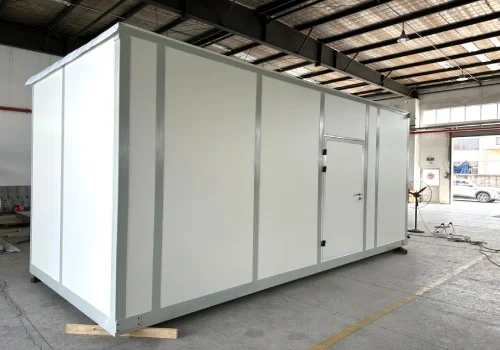
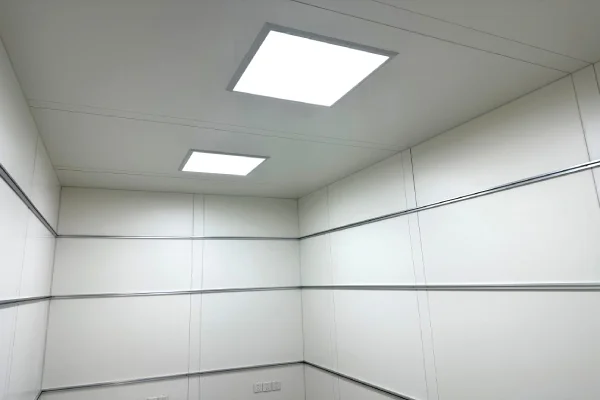
A hardwall cleanroom uses rigid wall panels, framed doors, sealed joints and a defined ceiling or filter layout. It is usually preferred when the local clean zone will be used repeatedly, cleaned often or connected to fixed process equipment. Rigid panels also make it easier to integrate windows, pass boxes, interlocked doors, return air grilles and service openings.
For inspection and packaging areas, the main advantage is stability. The wall line does not move when carts pass. Door positions are controlled. Surfaces can be wiped down. Junction details can be sealed. When users need a local environment that behaves like a small cleanroom rather than a simple cover, hardwall construction is often the stronger option.
The tradeoff is that changes require planning. If equipment layout is uncertain, the hardwall cleanroom should include spare service routes, removable panels or modular expansion points so later changes do not damage the boundary.
Softwall Cleanroom
Softwall Cleanrooms Help When Layout Flexibility Matters
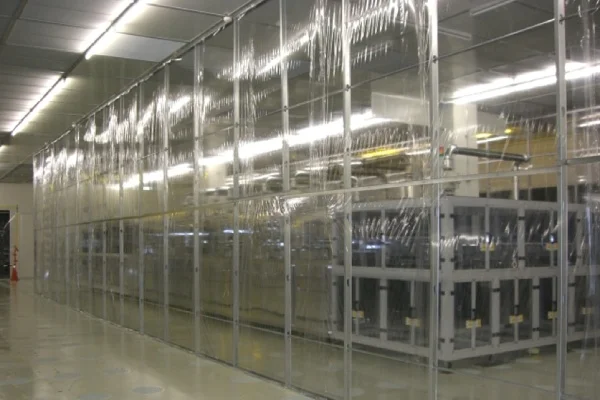
A softwall cleanroom normally uses a frame with flexible curtain panels. It can be useful for equipment unpacking, temporary inspection, local part staging, short-term process isolation or areas where the footprint may change. The system is often lighter than a hardwall room and can be adapted faster when the process team is still refining the layout.
The flexible boundary also creates design limits. Curtains can move when people or carts pass. Lower edges may be more difficult to seal than rigid bases. Cleaning and visual inspection procedures need to consider folds, overlaps and curtain condition. If the area has heavy traffic or strict pressure stability requirements, the design should be reviewed carefully before choosing softwall construction.
A softwall cleanroom is strongest when the project needs localized clean air, fast deployment and layout flexibility, and when the operating team understands how to maintain the curtain boundary.
Lab Partitions
Lab Partitions Are Useful When Cleanliness and Workflow Need Balance
Lab partitions sit between normal architectural partitions and full cleanroom envelope systems. They may be used to separate sample preparation, light assembly, testing, storage or support activities. In some laboratories, the main requirement is not a strict cleanroom class but better separation, cleaner surfaces, safer workflow and easier maintenance.
The technical question is whether the partition must hold pressure, support ceiling filters, receive return air grilles or integrate cleanroom doors. If the answer is yes, the design should move closer to a cleanroom wall system. If the room only needs visual separation, splash control or basic workflow zoning, lighter lab partitions may be enough.
For buyers, this distinction prevents overbuilding and underbuilding. A local clean zone should be engineered to the risk of the activity, not to the most expensive label available.
Use Cases
Inspection, Packaging and Rework Areas Need Different Boundary Behavior
| Area | Main cleanroom risk | Boundary direction |
|---|---|---|
| Incoming inspection | Particles from cartons, tools, carts and repeated door movement. | Softwall enclosure for flexible inspection, or hardwall room if repeated cleaning and stable pressure are required. |
| Final packaging | Open product exposure and operator traffic near finished goods. | Hardwall cleanroom or cleanroom-grade lab partitions with controlled doors and cleanable surfaces. |
| Rework bench | Frequent part movement, tool changes and uncertain future layout. | Softwall cleanroom if layout changes often; hardwall if process and airflow requirements are fixed. |
| Laboratory support | Cross-contamination between sampling, preparation and storage tasks. | Lab partitions or modular cleanroom walls depending on pressure and cleaning needs. |
| Equipment unpacking | Particles released from packaging before tools enter the cleaner area. | Softwall or movable enclosure when the area is temporary; hardwall when unpacking is continuous. |
Airflow and Pressure
Airflow Stability Is the Main Difference Users Feel Later
A rigid hardwall cleanroom usually gives the design team more control over leakage, return air and door behavior. This can be important when the local room must maintain a pressure difference against surrounding areas. It also helps when airflow must be guided from ceiling supply points toward planned returns.
A softwall cleanroom can still perform well, especially for local clean air protection, but the flexible curtain edge must be considered honestly. If the enclosure is placed in a busy walkway, air movement around the curtain may become hard to predict. If operators often lift or push curtains aside, the boundary may not behave consistently.
Lab partitions vary widely. Some are simple dividers; others can be integrated with cleanroom doors, ceiling systems and wall panels. The specification should clearly state whether the partition is a visual divider, a cleanable barrier or a true pressure boundary.
Durability and Cleaning
Cleaning Frequency Can Change the Best Choice
If the zone is cleaned many times per shift, rigid panels and stable base details are easier to inspect. Smooth hardwall surfaces are less likely to fold, drag or move during wiping. Door frames, window frames and lower trims can be specified as cleanroom details rather than general interior finishes.
Softwall curtains need their own cleaning procedure. The team should define curtain material, overlap, replacement plan, lower edge control and how to inspect for scratches, tears or cloudy surfaces. A softwall cleanroom can be very practical, but only when maintenance behavior is part of the design.
For lab partitions, chemical exposure and impact risk should be checked early. A partition near wet benches, carts or frequent sample transfer may need a stronger panel surface and better base protection than a quiet storage divider.
Expansion Planning
Future Change Should Be Designed Into the Boundary
Inspection, packaging and rework areas often change faster than main production rooms. New benches arrive. Process steps move. Customers add equipment. If the first boundary design leaves no expansion route, even a small layout change can become a wall demolition project.
Hardwall cleanrooms can support future change when the module rhythm, removable panels and spare service routes are planned in advance. Softwall cleanrooms can support change through movable frames and adjustable curtains. Lab partitions can support change when panels, doors and service openings are standardized.
The best boundary is not always the most permanent one. It is the one that matches the current risk while giving the owner a realistic path for the next process change.
Selection Checklist
Questions to Ask Before Choosing Hardwall, Softwall or Lab Partitions
- How stable must pressure be? A true pressure boundary usually favors rigid panels and controlled doors.
- How often will the layout change? Frequent changes may favor a softwall cleanroom or modular panels with planned expansion points.
- How will the zone be cleaned? Wiping frequency, chemicals and inspection expectations influence wall surface and base details.
- What traffic passes through the boundary? Carts, operators and material flow can damage weak curtain edges or poorly protected lower wall details.
- What services must cross the wall? Power, data, air, extraction and process utilities should be planned before the enclosure is built.
- What will happen in two years? A small amount of spare capacity can prevent expensive changes later.
These questions turn the hardwall versus softwall decision into an engineering decision instead of a catalog comparison.
Wonclean Support
Boundary Systems for Local Clean Zones and Modular Cleanrooms
Wonclean supports local clean zone projects with cleanroom wall panels, modular cleanroom systems, doors, windows, ceiling interfaces and project delivery experience. For buyers comparing hardwall cleanroom, softwall cleanroom and lab partitions, our team can help review airflow concept, cleanability, access routes and expansion requirements before the boundary type is finalized.
A clean boundary should feel simple after it is built. Getting there takes careful choices around panels, curtains, doors, returns, bases and service openings. That is where technical project support makes the difference.
FAQ
Hardwall and Softwall Cleanroom FAQ
When should I choose a hardwall cleanroom?
Choose hardwall construction when the local clean zone needs stable pressure, frequent cleaning, rigid doors, integrated windows, fixed services or long-term repeated operation.
When is a softwall cleanroom useful?
A softwall cleanroom is useful for flexible local clean zones, equipment unpacking, temporary inspection, part staging and areas where the layout may change.
Are lab partitions the same as cleanroom walls?
Not always. Some lab partitions are basic dividers, while others can be specified with cleanroom-grade panels, doors, seals and service openings.
Can hardwall and softwall boundaries be used in the same facility?
Yes. Many facilities use hardwall rooms for stable core processes and softwall enclosures for local, flexible or temporary clean zones.
Related Wonclean pages: Modular Cleanroom | Cleanroom Wall System | Cleanroom Ceiling System | Contact Wonclean