
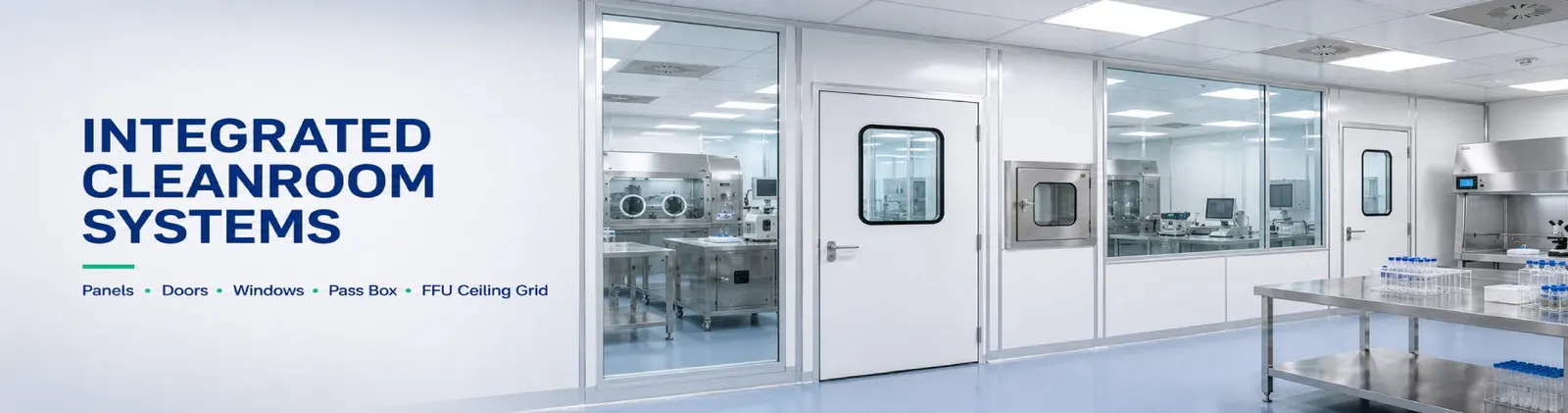
Small Portable Cleanrooms for Equipment Unpacking: Local ISO Control, Return Air and Movable Layouts
Technical Article | Portable Cleanroom Enclosures
Small Portable Cleanrooms for Equipment Unpacking: Local ISO Control, Return Air and Movable Layouts
A small portable cleanroom can protect equipment unpacking, part staging and local inspection without building a full cleanroom suite. The design still needs disciplined airflow, return air, access control and a movable layout that fits the real process.
small portable cleanroom portable cleanroom enclosures movable cleanroom unit
Equipment unpacking is a sensitive transition. A machine, tool or precision component may leave a shipping crate, outer bag or warehouse route before it enters a cleaner process area. If that step happens in uncontrolled space, particles from packaging, pallets, carts and floor traffic can move with the equipment. A portable cleanroom enclosure creates a local controlled zone where the team can unpack, inspect and stage items before they move into the main clean area.
Use Case
Equipment Unpacking Needs a Controlled Transition Zone
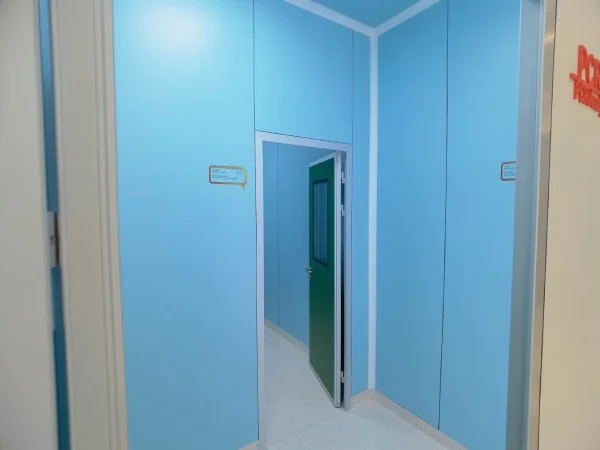
A small portable cleanroom is useful when the main cleanroom cannot accept cartons, wooden pallets or dirty outer packaging. The unpacking area can be placed near the goods-in route, warehouse boundary, assembly line or process room entrance. The goal is to remove outer contamination step by step while keeping sensitive parts under cleaner air.
The enclosure should be sized around the largest item, the required working clearance and the number of operators expected during unpacking. A room that is too small forces awkward movements and damages workflow. A room that is too large may use more airflow, floor space and cost than needed. The best layout protects the product and lets people work naturally.
For equipment unpacking, the portable cleanroom is not only a box with filters. It is a process step between dirty logistics and clean production.
Local ISO Control
Local Cleanliness Depends on Testing, Airflow and Operating Discipline
The phrase local ISO control should be used carefully. A portable cleanroom enclosure can be designed for a target cleanliness level, but the final result depends on filter selection, airflow volume, leakage control, room pressure, occupancy, cleaning practice and field testing. The enclosure alone does not prove a cleanliness class.
For equipment unpacking, the design team should define the target operating state. Will testing be done at rest, during unpacking, or while operators move through the enclosure? Will packaging material enter the room? How often will the floor be cleaned? These questions affect whether the selected filter modules, air changes and return path are enough.
A movable cleanroom unit can perform well when expectations are realistic and the operating procedure supports the airflow design. If users treat it as a general storage room, cleanliness will quickly drift away from the design intent.
Return Air
Return Air Should Be Planned Before the Door Position Is Final
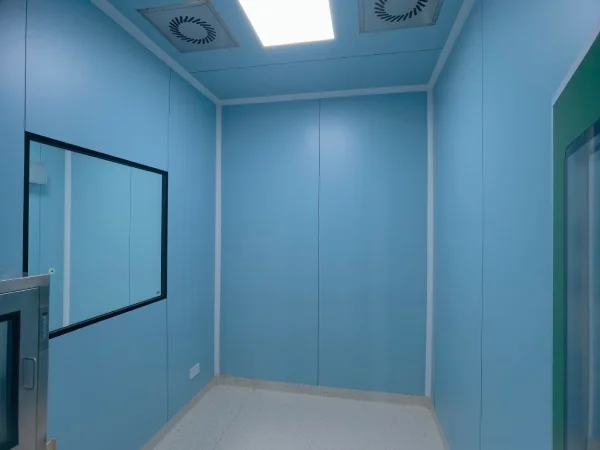
Return air is one of the most common weak points in portable cleanroom enclosures. Supply air may be clean, but if return air is blocked by packaging, benches or the equipment itself, airflow can short-circuit or become uneven. In a small room, one badly placed crate can change how air moves around the product.
The return path should be low enough and open enough to pull particles away from the work zone, while avoiding direct disturbance to the unpacking task. Door grilles, wall returns or low-level return panels can all work, but they must match the room layout. The design should also consider how the enclosure connects to the surrounding space and whether the local zone needs positive pressure.
For a movable cleanroom unit, return air should remain visible and easy to keep clear. If users cannot see the return path, they often block it without realizing the effect on cleanliness.
Movable Layout
Movable Does Not Mean Unplanned
Portable cleanroom enclosures are chosen because the owner needs flexibility, but flexibility still needs limits. The module should have a known footprint, access side, clean side, dirty side, power point, return air path and maintenance route. If these items change every week, the enclosure may no longer match the process it was designed to protect.
A movable cleanroom unit should be placed where material flow is simple. Outer packaging should enter from one side, cleaned or unpacked items should leave through another controlled path, and waste packaging should not cross the clean product route. Even in a compact room, one-way thinking reduces contamination risk.
Mobility is useful when the unit can be repositioned for planned process changes. It is not a substitute for airflow planning, floor protection or operator procedure.
Equipment Flow
Unpacking Workflow Should Separate Dirty, Transitional and Clean Steps
The cleanest portable enclosure can still fail if the workflow brings dirty packaging into the wrong area. A practical unpacking process usually has three layers: outer logistics handling, controlled removal of packaging and clean-side staging. Each layer should have a different surface, cleaning expectation and material movement rule.
For example, outer cartons and pallets may stay outside the enclosure. Inner bags or protected components may enter the portable cleanroom. Final inspection and wipe-down can happen under cleaner airflow before the item moves onward. The exact sequence depends on product risk, but the principle is stable: do not let dirty packaging travel farther than necessary.
Small portable cleanrooms work best when the room layout makes the correct workflow obvious. If operators have to guess where to stand, stage parts or discard packaging, the process needs another review.
Design Checklist
What to Confirm Before Ordering a Portable Cleanroom
| Design item | What to define | Why it matters |
|---|---|---|
| Target cleanliness | Target ISO class, test state, occupancy and cleaning procedure. | Prevents unrealistic expectations and supports measurable acceptance. |
| Room size | Largest equipment size, working clearance, staging space and operator movement. | Avoids cramped unpacking and reduces accidental contact with clean surfaces. |
| Air supply | Filter module type, air volume, ceiling position and service access. | Creates the local clean airflow needed for unpacking and inspection. |
| Return air | Low return position, free area, grille protection and blockage control. | Keeps airflow from short-circuiting or stagnating around packaging. |
| Mobility | Relocation route, lifting points, floor condition, power reconnection and leveling method. | Allows movement without damaging panels, doors or floor finishes. |
| Access control | Door type, observation window, entry side and waste removal path. | Supports stable operation and reduces cross-flow between dirty and clean steps. |
Operation
The Enclosure Must Match Daily Operating Habits
A small portable cleanroom can be technically sound and still underperform if daily habits do not match the design. Operators should know what materials can enter, when to remove outer packaging, how to clean the floor, where to place waste and how to keep return grilles clear. The room should not become a storage area for carts or unused packaging.
Maintenance is part of operation. Filters need replacement access, light panels need service space, door seals need inspection and wall panels should be checked for impact damage. A compact enclosure makes these tasks easier only when access is planned.
The best portable cleanroom design is practical enough that users can follow it every day without fighting the layout.
Validation
Cleanliness Claims Need Field Testing
A portable cleanroom should be tested after installation and after any major relocation. The test plan should state the operating condition, particle counting method, sampling locations and acceptance criteria. If the room is used for equipment unpacking, the owner may also test during typical unpacking activity to understand how packaging movement affects the local environment.
Pressure checks, airflow checks and visual inspections are also useful. They help confirm that doors close correctly, return air is not blocked, filters are accessible and panels have not shifted during movement. For movable units, a simple relocation checklist can prevent a clean enclosure from becoming misaligned after it is moved.
This is the responsible way to discuss local ISO control: design for the target, operate with discipline and verify performance on site.
Wonclean Support
Portable Cleanroom Enclosures for Local Clean Zone Projects
Wonclean supports portable and modular cleanroom projects with wall panels, doors, ceiling interfaces, return air details and compact enclosure layouts. For equipment unpacking, part staging and inspection areas, we can help review the room footprint, airflow path, access side, service connections and movement plan before production.
A movable cleanroom unit should make the clean step easier, not more confusing. With the right planning, a small enclosure can give a facility a focused clean zone exactly where it is needed.
FAQ
Small Portable Cleanroom FAQ
What is a small portable cleanroom used for?
It can be used for equipment unpacking, part staging, local inspection, small assembly tasks and temporary clean zones near a main process area.
Can a portable cleanroom meet a local ISO target?
It can be designed for a target cleanliness level, but the final result depends on filters, airflow, leakage control, cleaning, occupancy and field testing.
Why is return air important in portable cleanroom enclosures?
Return air controls how clean supply air leaves the enclosure. If returns are blocked or poorly placed, airflow can become uneven around the product.
Can a movable cleanroom unit be relocated after installation?
Yes, if lifting, leveling, power reconnection, panel protection and retesting are planned. After relocation, airflow and cleanliness should be checked again.
Related Wonclean pages: Modular Cleanroom | Cleanroom Wall System | Cleanroom Ceiling System | Contact Wonclean